NanoShield® Trap: Frequently Asked Questions (FAQs)
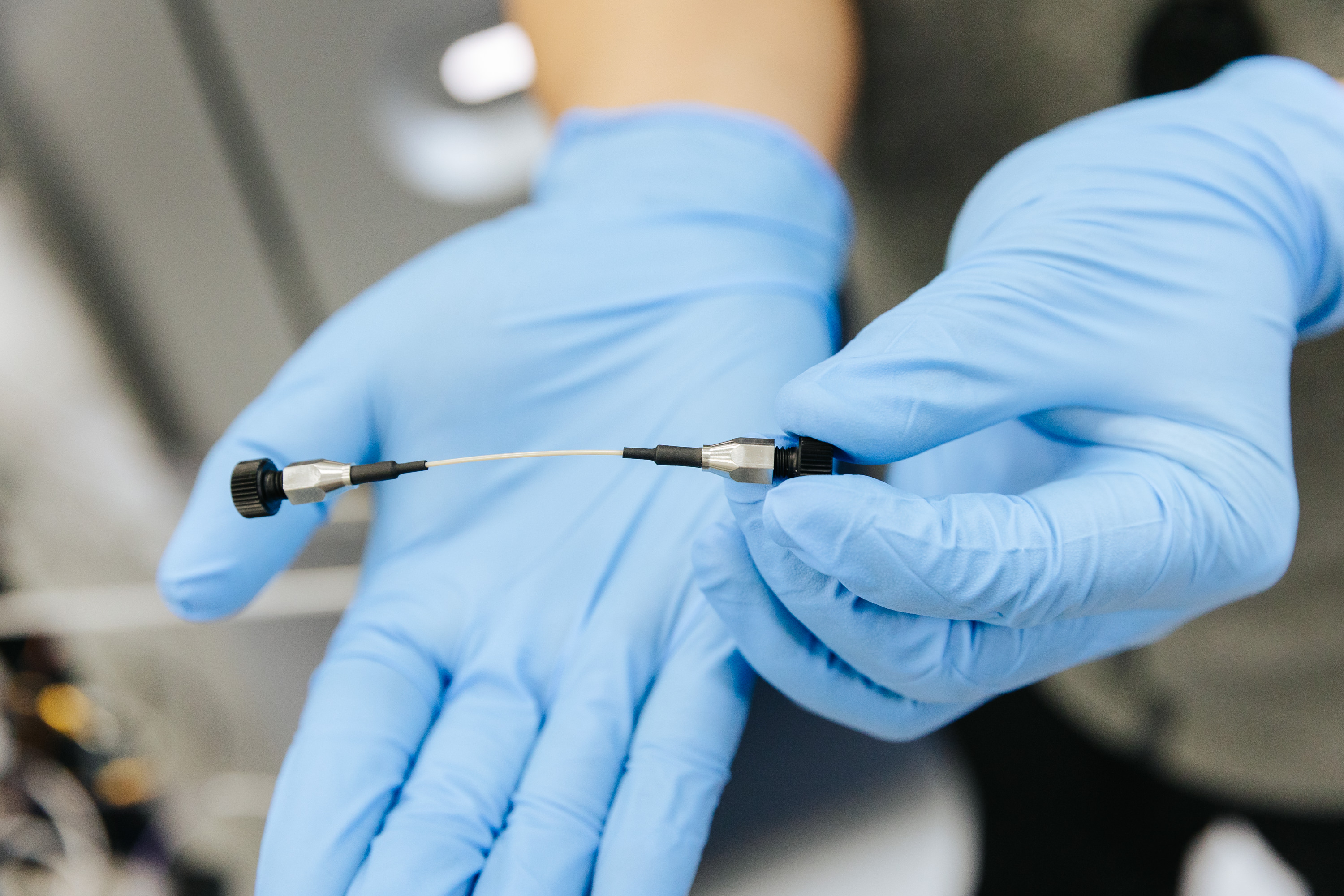
What is the NanoShield® Trap?
Samples often contain salts, detergents, and other particulates that can interfere with mass spectrometry performance. A trap column is used as an inline chromatographic (clean-up) step to retain analytes of interest while allowing these interfering components to be washed away prior to separation and detection. This improves signal quality and protects downstream LC-MS components, including the analytical column. NanoShield™ C18 trap columns are designed to provide efficient sample clean-up and peptide retention while integrating seamlessly with IonOpticks Aurora Series Columns.
Why should I use a trap column?
Using a trap column offers several important benefits. Traps allow faster sample loading by accommodating larger injection volumes, at higher flowrates, concentrating the analytes in dilute samples and reducing overhead time. They also provide sample purification, removing salts, detergents, and other particulates that could otherwise interfere with mass spectrometry, all while protecting the analytical column.
Will I lose peptide or protein IDs?
Traditionally, some level of peptide loss has been considered an acceptable trade-off when using trap columns. NanoShield®, however, delivers near-direct injection performance. Testing showed less than a 1% reduction in protein identifications and only a 1–3% reduction in precursor identifications compared with direct injection, when evaluated against a comparable trap column. For further details, you can refer to the Application Note.
How does NanoShield™ performance compare to other trap columns on the market?
NanoShield® C18 traps outperform traditional trap columns by retaining hydrophilic peptides that are often lost during sample loading. Early-eluting post-translationally modified peptides (e.g., phosphopeptides and glycopeptides) can pass through traditional trap columns during sample loading and clean-up, reducing proteome coverage. NanoShield® removes this limitation, enabling direct injection-level proteome coverage and identifications.
Can I use NanoShield™ for both forward and reverse-flush?
The NanoShield® C18 5 cm × 100 μm trap is intended only for reverse-flush operation on-valve. Using it in forward-flush mode will compromise performance and is not recommended. For questions about forward flush workflows, please Contact Support.
What is the sample loading capacity of the NanoShield™?
Loading capacity is limited to the lesser of 1 µg or the maximum permitted by the analytical column.
For example:
For example:
- Ultimate 25×150 µm – column max 3 µg, so can load 1 µg
- Rapid 5×75 µm – column max 50 ng, so load less than 50 ng
For more information on column maximum load capacity, see our Help Centre article.
Can I pressure load samples onto the NanoShield™?
Yes, the recommended loading pressure for NanoShield® is 1000 bar. Pressures above 1000 bar, if supported by your UHPLC system, may cause peak tailing or other undesirable peak characteristics.
What flow rates should I use for loading?
Loading flow rates depend on the pressure limit of the UHPLC system. Recommended loading flow rates vary between 3 to 15 µL/min, if not loading by pressure.
How long should I divert to waste before switching to loading on the analytical column?
We recommend loading 5 - 10 times the trap column volume. For the NanoShield® 5 cm x 100 um trap, this equates to approximately 2.5 - 5 µL. At a flow rate of 5 µL/min, loading 10 column volumes requires approximately 1 minute before switching the trap in-line with the analytical column.
Does the NanoShield® require heating?
NanoShield® does not require heating. While heating analytical columns to 30–60 °C is recommended for optimal performance, the NanoShield™ trap can be operated at ambient temperature over the valve. Heating may, however, facilitate faster loading by reducing back-pressure on the trap.
What connectors do I need to install NanoShield® on my UHPLC?
NanoShield® comes with two nanoZero® fitting ends for easy installation and requires two short capillaries, such as Thermo Scientific™ nanoViper 30 µm ID × 10 cm.
Can NanoShield® be used with my UHPLC system?
NanoShield® is intended only for reverse-flush operation on-valve. Confirmed compatible UHPLC systems are shown below:
How should I clean the NanoShield®?
The recommended method for cleaning the NanoShield® is to flush with 80-85% B mobile phase for three column volumes, followed by re-equilibration with 1% B for two column volumes prior to the next injection. Additionally, the trap can be reversed and flushed with 80-85% B to help remove any particulates near the column outlet. We recommend the following buffer compositions:
- Buffer A: 99.9% MilliQ Water, 0.1% formic acid
- Buffer B: 99.9% Acetonitrile, 0.1% formic acid
Can I store my NanoShield®? If so, how should I store it?
Yes, the NanoShield® can be stored after use. We recommend flushing with 80-85% B both after use and prior to storage.